Speed isn't always just an advantage for a business, when it comes to international shipping, it's a necessity.
As cross-border e-commerce expands, companies face mounting pressure to deliver goods faster and more reliably than ever before. When tight deadlines, high-value inventory, or unexpected disruptions put your operations to the test, traditional ocean and road shipping methods cannot always offer the agility your business needs.
In these situations, a fast-track option becomes desirable, and that option is international air freight. As the quickest form of modern freight forwarding, shipments made by air connect global markets in a matter of hours.
No matter what cargo you’re moving, air freight provides the speed, security, and predictability required to keep your business moving forward making it the ideal choice for freight with specific requirements or tight deadlines. Below, we’ve discussed the seven key benefits of using international air freight services and how they can transform your global supply chain.
1. The fastest freight delivery
In the time it takes ocean transit to make a 40-day long haul delivery, airplane delivery could make the same trip almost eight times. This gives businesses the ability to organise last-minute deliveries and move urgent or time-sensitive freight with the assurance that it will be delivered in good time. It even gives them the opportunity to align the sale of seasonal or limited-edition items across global branches.
This method of freight forwarding is great for reactive deliveries like sudden demand surges or emerging trends in foreign regions that businesses want to take advantage of.
Supporting critical shipments
In emergency scenarios, for example, situations where factory lines are brought to a halt, air freight can be the vital link that gets operations back up and running.
2. Extensive global reach
Air freight services give your business access to any international market that you need to reach. This allows small-to-medium organisations to internationally scale without the necessity for physical distribution networks or warehouses in every country.
With air freight, trade across landlocked nations that sea freight can’t reach, becomes accessible. By making use of vast international airport networks, cargo can fly directly into regional hubs and bypass heavily congested ocean ports. This brings your products significantly closer to their final destination and simplifies onward journey planning.
Airport networks
Freight forwarders will use regional and local airports to bypass heavily congested seaports and congested coastal highway corridors. This brings cargo closer to its final delivery point, shortening its journey timeline by up to multiple weeks.
Furthermore, direct flight routes reduce the intermediate transfers and handling of cargo, further reducing the time it takes for goods to get from point A to point B. This approach reduces areas where delays can build up and keeps your supply chain moving as efficiently as possible.
3. Reliability and predictable schedules
Air travel follows strict schedules, with very specific allocated departure and arrival times built into the highly disciplined schedules. Unlike ocean transport, which is frequently subject to coastal congestion, commercial cargo flights operate within dedicated departure slots ensure that cargo moves on a precise timetable.
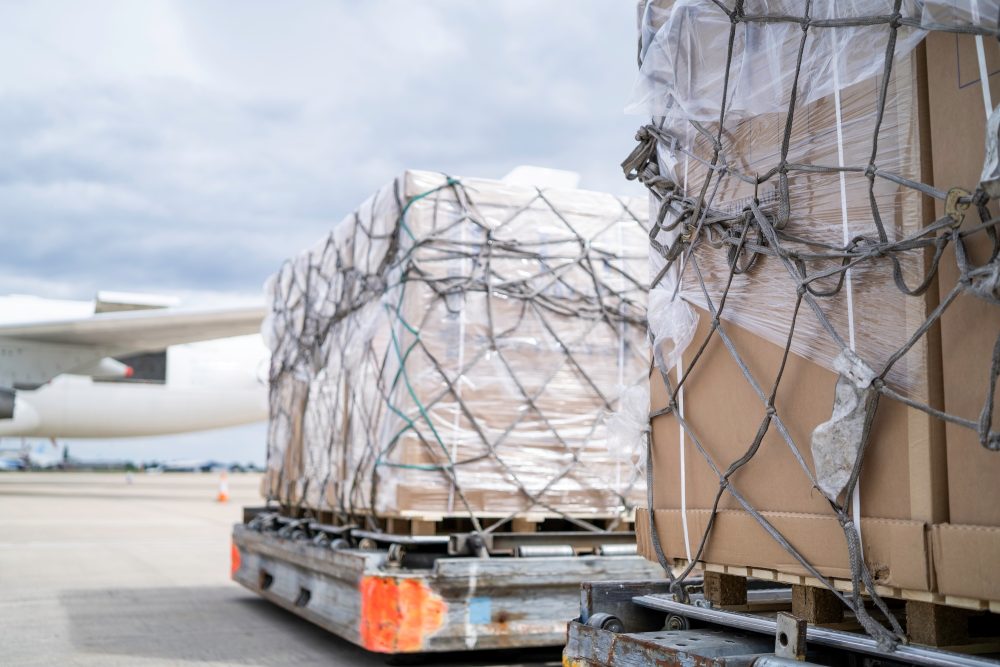
Flight travel is as frequent as it is fast, with major trade lanes making multiple journeys per day. If a cargo load misses an initial departure, it can generally be rebooked on the next available flight hours later rather than sitting idle for a week, as it would do with sea freight.
Bypassing seafaring risks
While air freight is prone to facing certain complications, it is less likely to do so than other forms of freight forwarding. Sea freight for example, may sail into a multitude of maritime hazards such as seaport backlogs, canal blockages, ocean storms, or labour disputes that can hold up a journey for a disruptive amount of time. While these problems occur on the sea, air freight is a great backup or more direct route to avoid these issues.
4. Enhanced security
Airports feature some of the tightest security protocols in the logistics industry, thoroughly protecting cargo from its departure all the way to its arrival.
Cargo is moved through strictly controlled airport security zones that are equipped with continuous monitoring and restricted access protocols. It is stored in Unit Load Devices (ULDs) or tightly palletised, keeping shipments intact and protected throughout transit.
Shorter transit times provided by air travel reduce the amount of physical handling that cargo needs. It also reduces the risk of theft, loss, or damage, making this a great choice of freight forwarding for fine art, luxury goods, currency, and high-tech electronics.
Note that because the overall risk profile of air cargo is substantially lower than ocean freight, cargo insurance premiums are frequently much cheaper.
5. Reducing warehousing needs and simplifying operations
Fast delivery radically transforms how businesses manage their inventory, unlocking significant capital efficiencies across the entire supply chain. By reducing transit times, companies can move away from traditional, high-volume storage strategies and adopt leaner, cost-effective operational models.
Rapid air freight allows businesses to operate on an agile framework. Rather than purchasing and holding massive quantities of stock based on high-risk speculative forecasts, companies can maintain smaller buffer stocks and order inventory based on real-time, actual customer demand.
Furthermore, by minimising the volume of goods sitting idle in warehouses or floating in transit containers for weeks at sea, businesses free up working capital that can be reinvested into growth, product development, marketing, or services that will benefit the business in other areas.
6. Better shipment tracking and visibility
Complete end-to-end cargo visibility gives supply chain managers total control and transparency over their shipments.
Modern flight tracking tools provide real-time updates on location, flight progress, altitude, and estimated arrival times. When milestones like customs clearance or final dispatch are reached, freight managers receive automatic alerts, keeping them connected to the journey at all times.
This precise tracking data enables businesses to keep customers informed with accurate delivery updates, building a solid relationship of trust and satisfaction. Additionally, early detection of flight schedule adjustments or complications allows logistics teams to adapt plans proactively.
This also gives businesses a chance to update customers where necessary, solidifying their reliability.
7. Solutions for specialist goods
Air freight is engineered to handle complicated, fragile, and sensitive goods that standard ground or ocean transit cannot accommodate safely, including:
- Temperature-sensitive cargo that can be stored in thermal packaging, such as vaccines, biologics, and other medical goods.
- High-tech and delicate electronics like microchips and household gadgets that can be protected from humidity or transit shocks experienced on the road.
- Perishables and fresh produce like flowers, seafood, and even time-sensitive goods like high-end fashion can be protected from spoilage or market value loss in the air.
The type of cargo you need to move should be one of the first things you consider when organising your freight forwarding method as the needs of your goods are the biggest determining factor of the mode of transport you should opt for.
While timelines and budgets are important, perishable freight will struggle to make a multi-week ocean journey and certain medical products must arrive within a matter of hours which isn’t always possible by road.
When air freight is the right choice
Of the three main forms of freight forwarding (air, sea, and road) air freight is best for journeys with specific intentions. See below how the three options compare:
When to choose air freight
International air freight services are ideal for time-critical cargo that’s facing a tight deadline or strict arrival windows across the globe. This form of freight forwarding is the right choice for moving perishable, luxury, or high-value products that are at more risk of being damaged or stolen.
When to choose sea freight
If your cargo is massive in terms of volume, some sort of heavy machinery, a bulk load of raw materials, or low-margin goods, opt for sea freight where the transit speed is secondary to keep costs low.
When to choose road freight
For road freight to be your best option, you will have cargo that needs to be moved regionally by a short to medium distance. Schedules are predictable for this freight forwarding option and operational costs are low.
Universal Forwarding supporting your air freight logistics
Navigating international air freight requires an experienced freight forwarder with direct access to airline networks and expert customs knowledge. Established in 1989 and strategically based directly at Newcastle International Airport, Universal Forwarding provides comprehensive, end-to-end air freight support tailored to your business needs.
We offer flexible, tiered shipping solutions designed to fit any deadline or budget, meaning your cargo can get to where it needs to be, right when it needs to be there. Beyond transport, we handle all customs declarations, Master Airway Bills (MAWB), and House Airway Bills (HAWB) to guarantee swift terminal clearance and avoid border delays.
If your business relies on rapid market access or the safe transport of high-value goods, reviewing your air freight strategy can unlock significant operational efficiencies. Get in touch with our specialist team today for more information. Or, click here to get a quote for your global air freight requirements.