Temperature controlled logistics plays an essential role in the modern supply chain, helping to maintain specific temperature ranges while goods are in transit.
It is particularly important for industries moving sensitive products such as food, pharmaceuticals, and chemicals, where even small temperature changes can affect quality or performance. By keeping conditions stable throughout the journey, businesses can better protect their goods and maintain efficient supply chains.
Here’s why temperature controlled logistics is essential, and how it can benefit businesses moving sensitive products.
1. It protects product quality during transit
Many products rely on stable environmental conditions to maintain their quality. When goods are exposed to unsuitable temperatures during transit, their appearance, texture, or performance can quickly deteriorate. This can be particularly problematic for products such as fresh produce and certain pharmaceutical products.
Temperature controlled logistics helps prevent these issues by maintaining a consistent environment throughout the journey. Specialised vehicles and insulated containers are designed to keep goods within a defined temperature range from the moment they are loaded until they reach their destination.
By ensuring stable conditions, businesses can be confident that their products will arrive in the same condition they left the warehouse. This is especially important for suppliers and distributors that rely on maintaining product standards across multiple deliveries and locations.
2. It ensures the safe handling of goods
Some products present safety risks if they are not transported under the correct conditions. Food products, for example, can quickly become unsafe if exposed to temperatures that allow harmful bacteria to grow. In the pharmaceutical sector, certain medicines and vaccines must be kept within strict temperature limits to remain effective.
Temperature controlled logistics helps businesses manage these risks by maintaining the required environment throughout the journey. Consistent monitoring ensures that conditions remain within the specified range, helping to prevent goods from becoming unsafe during transit.
For companies responsible for distributing sensitive products, maintaining safe handling practices during transportation is a critical part of protecting both customers and end users.
3. It helps businesses meet industry regulations and standards
Many sectors operate under strict rules governing how temperature-sensitive goods must be transported. For example, the Food Safety Act 1990 and Hazard Analysis and Critical Control Points (HACCP) guidelines govern how food products are handled and transported in the UK, while the pharmaceutical sector follows Good Distribution Practice (GDP) regulations and, where relevant, EU Annex 15 standards for the storage and transport of medicines.
Temperature controlled logistics allows businesses to meet these expectations by providing systems that monitor and record conditions throughout transit. Real-time temperature tracking means that goods remain within the required ranges at all times, while recorded data creates a reliable audit trail that demonstrates compliance.
This information is essential during audits or quality checks. Through maintaining accurate transport records, companies can show that their logistics processes meet both industry standards and regulatory requirements, giving confidence to customers and regulators alike.
4. It extends product shelf life
For many perishable goods, time and temperature play a major role in determining how long products remain usable. Unstable transport conditions can accelerate deterioration, leaving less time for storage, distribution, and sale once goods arrive.
Temperature controlled logistics helps preserve products by slowing down the natural processes that cause spoilage or degradation. This is particularly valuable for items that are sensitive to environmental changes.
When goods arrive with more of their shelf life remaining, retailers and distributors have greater flexibility to store, display, and sell them. This helps make sure that products can be used or sold within the intended timeframe.
5. It reduces supply chain waste and costs
Damaged or spoiled goods can have a significant financial impact on businesses. When shipments arrive in poor condition, companies may need to replace products, manage returns, or absorb the cost of lost stock.
Temperature controlled logistics helps reduce these risks by maintaining the correct environment for sensitive goods throughout the journey. By protecting shipments during transit, businesses can avoid unnecessary losses and maintain more reliable delivery outcomes.
Reducing the likelihood of damaged products also helps improve overall supply chain efficiency. Fewer rejected deliveries and replacements mean businesses can operate more smoothly while keeping operational costs under control.
6. It supports long-distance and international distribution
Many temperature-sensitive goods need to travel long distances before reaching their final destination. Fresh food, specialist chemicals, and pharmaceutical products are often shipped across regions or international markets.
Temperature controlled logistics makes this possible by maintaining stable conditions even during extended transit times. With the right equipment and monitoring in place, businesses can move sensitive products across complex supply chains without compromising their requirements.
This capability allows companies to expand into wider markets while maintaining the same product standards expected by customers, regardless of where goods are shipped.
How Universal Forwarding can help your businesses
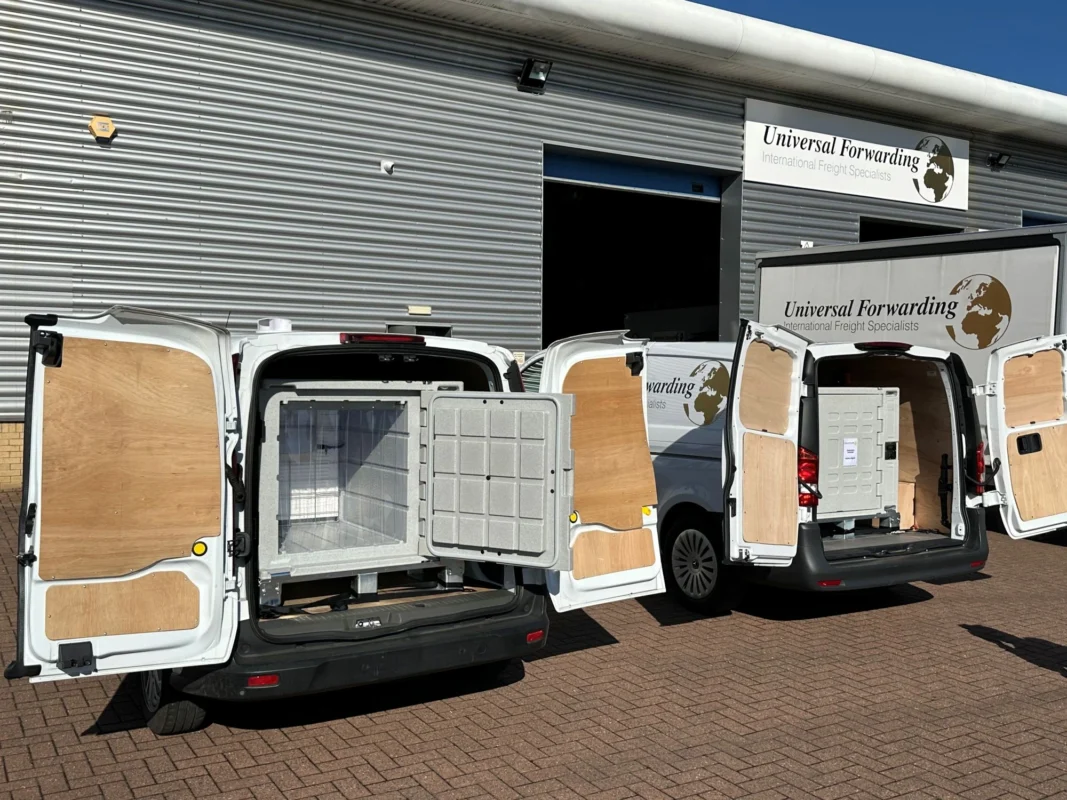
At Universal Forwarding, we support businesses with specialist logistics services for temperature-sensitive shipments, combining expertise with state-of-the-art equipment. Our fleet includes vehicles fitted with temperature-controlled containers, allowing us to maintain precise conditions ranging from -21°C to +31°C for chilled, frozen, or ambient goods throughout transit.
With experience handling sensitive products across multiple industries, our team understands the importance of careful planning, utilising full vehicle tracking and continuous temperature monitoring throughout the journey. From collection to final drop-off, we guarantee your goods will remain in optimal condition.
If you would like to learn more about our temperature-controlled logistics services, get in touch with our team today to discuss your requirements.